
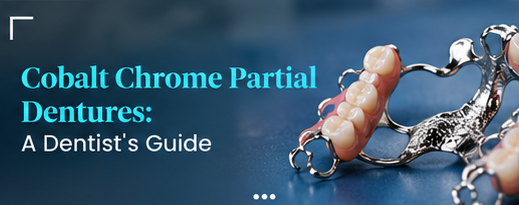
A cast partial denture can be one of the most comfortable and long lasting prosthetics a patient ever wears. Thin, rigid and tooth supported, a cobalt chrome framework covers less of the mouth than acrylic and stays stable for years. But it can also be the most frustrating case to get right, and nearly every problem traces back to one thing: the design was left to chance.
For more on the removable options Swift Lab produces, see our guide to dental lab dentures. Clinics outside Ras Al Khaimah can read how our courier service works in our dental lab near me guide.
Here are the six rules we’d share with every clinic that sends us partial denture work.
Why Choose a Cast Partial Denture
Compared with acrylic partials
Acrylic partials are quick and inexpensive, but they’re bulky, often rely on the gums for support, and can damage tissue over time. A cast partial denture is thinner, stronger, more hygienic and supported by the teeth.
Longevity
With good design and maintenance, cobalt chrome frameworks commonly last many years.
Rule 1: Survey Before You Prepare
Surveying the study model identifies the path of insertion, the height of contour on each tooth, usable undercuts, and interferences.
Classify the arch
Kennedy classification helps you decide whether the partial will be tooth supported or tooth and tissue supported, which shapes every design decision.
Why surveying comes first
The survey tells you where rest seats and guide planes are needed. Without it, you’re preparing teeth without knowing what the framework requires.
Rule 2: Prepare Rest Seats
Rests transfer biting forces down the long axis of the teeth.
Occlusal rests
Prepare spoon shaped rest seats about 1.5 mm deep and roughly a third of the tooth’s mesiodistal width.
Cingulum and incisal rests
On canines, a prepared cingulum rest gives good support with minimal visibility.
What happens without prepared rests
The lab has to make the rest thin to avoid occlusal interference, which weakens it, or the rest sits high in the bite.
Rule 3: Create Guide Planes
Flatten proximal surfaces next to edentulous spaces so they’re parallel to the path of insertion. Guide planes improve stability, reduce food trapping and help the partial seat predictably.
Rule 4: Choose the Right Major Connector
Mandible
A lingual bar needs enough depth between the gingival margin and the floor of the mouth, roughly 7 to 8 mm. When there’s less, prescribe a lingual plate.
Maxilla
Palatal straps or anteroposterior straps are rigid and comfortable. A full palatal plate suits long distal extension cases needing maximum support.
Comfort matters
Patients notice bulk. Choose the smallest rigid connector that does the job.
Rule 5: Place Clasps in Measured Undercuts
Cast clasps
Cobalt chrome clasps are stiff, so they should engage shallow undercuts of about 0.25 mm.
Wrought wire clasps
These are more flexible and can engage deeper undercuts, around 0.5 mm, where flexibility helps.
Distal extension cases
For free end saddles, an RPI clasp system reduces torque on the abutment tooth.
Rule 6: Send a Complete Design
A marked design, drawn on the model or included digitally, is the single best way to get a framework that fits first time. If you’d prefer, ask the lab to propose a design for your approval before production.
What to include
- Accurate impressions or scans with good sulcus detail
- Your marked design or a request for a lab proposed design
- Bite registration
- Tooth shade and mould
Digital Frameworks
Cast partial denture frameworks can now be designed digitally from scans and produced by 3D printing or casting. Digital workflows offer consistent fit and easy design review.
Common Problems
| Problem | Cause | Prevention |
|---|---|---|
| Framework doesn’t seat | Undercuts, no guide planes | Survey and prepare guide planes |
| Rests high in bite | No prepared rest seats | Prepare 1.5 mm rest seats |
| Clasps loose or tight | Undercut not measured | Survey and measure undercuts |
| Patient discomfort | Bulky connector | Choose the smallest rigid connector |
Frequently Asked Questions
How long does a cast partial denture last?
With good design and care, commonly many years.
Do I need to prepare teeth for a cast partial denture?
Yes, for rest seats and guide planes. Skipping them compromises fit and support.
Can a cast partial denture be made digitally?
Yes, frameworks can be designed from scans and printed or cast.
What if the patient has a crown on an abutment tooth?
The crown can be designed with rest seats and guide planes built in.
Conclusion: Design First, Then Prepare
A cast partial denture fits first time when surveying, rest seats, guide planes, connectors and clasps are all planned before the case reaches the lab. Swift Lab designs and produces cobalt chrome frameworks and complete partial dentures for clinics across the UAE.