
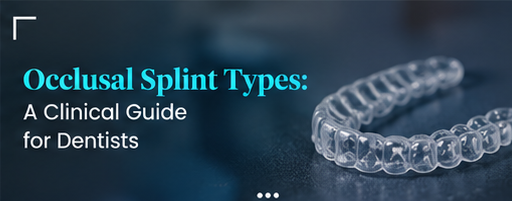
Every occlusal splint looks much the same sitting on a model. In the mouth, they do very different things. A hard stabilisation splint protects teeth and restorations night after night; an anterior deprogrammer can relieve muscle pain quickly but cause problems if worn for months; a soft guard can feel comfortable yet make some patients clench harder. Choosing the right design matters.
Splints are especially important for patients with crowns and implants, and our zirconia crown care guide explains to patients why grinding threatens their restorations. Once a splint is delivered, share our guide on how to clean removable appliances. For sleep related cases, Swift Lab also makes custom made appliances such as mandibular advancement devices.
Why Occlusal Splint Choice Matters
Protection vs treatment
Some splints are designed mainly to protect teeth and restorations from grinding forces. Others aim to relieve muscle symptoms or manage joint problems. Knowing which goal you’re treating guides the design.
Long term safety
Some designs are safe to wear indefinitely. Others can change the bite if worn too long. That difference is often overlooked.
Hard Stabilisation Splints (Michigan Type)
This is the standard occlusal splint for most bruxism and many muscle related TMD cases.
Design
A full coverage hard acrylic splint, usually on the maxillary arch, with a flat occlusal surface, even contacts from all opposing teeth, and canine guidance in lateral movements.
Why it’s the default
Full coverage prevents teeth from over erupting, even contacts spread load, and canine guidance reduces muscle activity in excursions. It’s durable and safe for long term wear.
Upper or lower?
Upper splints are most common and easier to balance. Lower splints can be easier for some patients to tolerate and speak with. Both work when well designed.
Soft and Dual Laminate Guards
Soft guards
Soft guards are comfortable and quick to make, but they wear fast and, in some patients, seem to encourage clenching. They’re best for short term use or mild cases.
Dual laminate guards
Dual laminate guards have a soft inner layer and a hard outer layer. They combine comfort with durability and can be adjusted like a hard splint. They’re a good compromise for patients who find hard acrylic uncomfortable.
Anterior Deprogrammers (NTI Style)
Design and use
These small appliances cover only the front teeth, preventing posterior contact. They can reduce muscle activity and give fast relief, and they’re useful in diagnosis and for short periods.
The caution
Why partial coverage needs supervision
When worn long term, partial coverage splints can let back teeth over erupt, which changes the bite. Anyone wearing one should be reviewed regularly, and it shouldn’t be used as a permanent night guard.
Anterior Repositioning Splints
These hold the mandible forward to manage certain disc displacement cases. They’re a specialist, short term treatment, and patients need close monitoring.
Occlusal Splint Comparison Chart
| Splint | Coverage | Main use | Long term wear |
|---|---|---|---|
| Michigan stabilisation | Full arch, hard | Bruxism, muscle TMD | Yes |
| Dual laminate | Full arch | Mild to moderate bruxism | Yes, with review |
| Soft guard | Full arch | Short term, mild cases | Limited |
| Anterior deprogrammer | Front teeth only | Short term relief, diagnosis | No |
| Anterior repositioning | Full arch | Disc displacement | Specialist only |
What the Lab Needs
Records
- Full arch scans or impressions of both arches
- A bite record at the vertical opening you want for the splint
- The arch you want the splint on
Design details
- Splint type
- Guidance: canine guidance, group function or flat
- Thickness preferences if any
- Notes on crowns, implants or missing teeth
Digital splints
Splints can now be designed digitally and 3D printed or milled, giving excellent fit and consistent thickness. Send full arch scans and a bite scan at the desired opening.
Adjustment and Follow Up
Every occlusal splint needs chairside adjustment at delivery to achieve even contacts and smooth guidance. Review at regular intervals, check for wear patterns, and readjust as muscles relax.
Patient care instructions
Patients should brush the splint daily with cool water, avoid hot water that can distort it, and store it dry in its case.
Frequently Asked Questions
Hard or soft splint for bruxism?
Hard or dual laminate splints are generally preferred for bruxism because they’re durable and can be adjusted.
Can an occlusal splint stop bruxism?
It protects teeth and restorations but doesn’t cure bruxism itself.
Upper or lower occlusal splint?
Both work. Upper is more common; lower can be easier for some patients.
How long does a hard splint last?
Several years with good care, depending on how heavily the patient grinds.
Conclusion: Match the Splint to the Goal
The right occlusal splint depends on whether you’re protecting teeth, relieving muscles or managing a joint problem. For most patients, a well adjusted hard stabilisation splint is the safest long term choice. Swift Lab makes stabilisation splints, dual laminate guards, sports guards and TMD appliances to your prescription.