
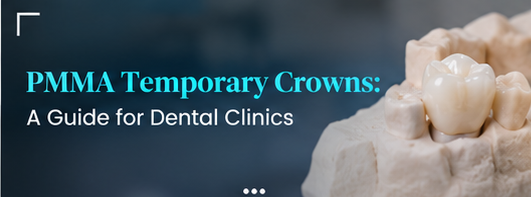
It’s easy to think of a temporary crown as a placeholder: something quick to cover the prep until the real crown arrives. But a temporary does real work. It protects the pulp, holds tooth position, shapes the gum and, in aesthetic cases, lets the patient trial their new smile. When it fails, it costs you an emergency appointment and costs the patient confidence.
That’s why more clinics are ordering lab made PMMA temporaries for their longer or more demanding cases. They’re especially useful in implant treatment; see our dental implant cost page for component pricing. They also help patients understand the value of the final restoration, which our zirconia crown price guide explains. Swift Lab produces both from our dental laboratory in Ras Al Khaimah.
What a Temporary Crown Needs to Do
Protect the tooth
It seals dentine, reduces sensitivity and protects the pulp from bacteria and temperature.
Hold position
It stops the prepared tooth and its neighbours from drifting or over erupting.
Shape the gum
A well contoured temporary guides the gum tissue so it’s healthy and in the right position when the final crown is fitted.
Test the result
In aesthetic and bite changing cases, it lets you and the patient test shape, length and function before the final restoration.
Chairside vs Lab Made
Chairside bisacryl temporaries
These are made in the mouth from a putty index or preformed shell. They’re quick and inexpensive, and perfectly fine for a single temporary crown worn for a week or two.
Lab milled PMMA temporaries
These are milled from industrially polymerised PMMA blocks. Because the material is cured under controlled conditions, it’s denser, stronger and less porous than resin mixed chairside.
Why density matters
Less porosity means better stain resistance, a higher polish, less plaque build up and better long term strength.
Comparison
| Factor | Chairside bisacryl | Milled PMMA |
|---|---|---|
| Strength | Moderate | High |
| Fit | Good | Excellent |
| Stain resistance | Moderate | High |
| Best duration | Days to a few weeks | Weeks to months |
| Chair time at fit | Longer | Shorter |
When to Order a PMMA Temporary Crown
Long treatment timelines
Periodontal healing, endodontic reassessment, bone grafting or orthodontic phases can mean a temporary has to last months. PMMA handles this far better.
Full arch implant cases
Immediate load provisionals must survive chewing for months while implants integrate. Milled PMMA provisionals, often screw retained, are the standard choice.
Planning ahead
For immediate load cases, the lab can prepare the provisional in advance from the treatment plan, ready for chairside pick up on the day of surgery.
Aesthetic cases
When you’re trialling tooth shape and length before final veneers or crowns, a PMMA temporary crown gives the patient a realistic preview that holds up to daily life.
Multi unit bridges
Chairside bridge temporaries often fracture at the connectors. PMMA bridges are much stronger.
Changing the bite
When you’re increasing vertical dimension, PMMA temporaries let the patient adapt to the new bite before you commit to permanent restorations.
The Workflow
Option 1: Pre made shell
The lab designs the temporary from pre-op scans or a diagnostic wax up. You reline it chairside after preparation.
Option 2: Direct fit
You send scans of the preparation, and the lab mills a temporary that fits the prep directly.
Copying the approved shape
Once the patient approves the temporary, scan it and send it with the final case. The lab can copy the exact shape and length into the final restoration.
Tips for Success
Thickness
Allow at least 1.0 to 1.5 mm of thickness, especially at bridge connectors.
Cementation
Use temporary cement sparingly, and avoid permanent resin cements on temporaries you’ll need to remove.
Hygiene
Design embrasures and pontics so patients can clean around them.
Frequently Asked Questions
How long can a PMMA temporary crown last?
Several months in most cases, and longer with good occlusion and hygiene.
Is PMMA stronger than bisacryl?
Milled PMMA is generally stronger and more wear resistant than chairside bisacryl.
Can a temporary crown be used on implants?
Yes. PMMA is widely used for screw retained implant provisionals, including full arch cases.
What does the lab need for a temporary crown?
Scans of the prep or pre-op scans, the opposing arch, a bite, and the shade.
Conclusion: Invest in the Temporary for Better Finals
A good temporary crown protects the tooth, shapes the gum and tests the final result. For longer, more complex or aesthetic cases, milled PMMA gives you strength, fit and confidence that chairside materials can’t match. Swift Lab mills PMMA temporaries and full arch provisionals for clinics across the UAE.