
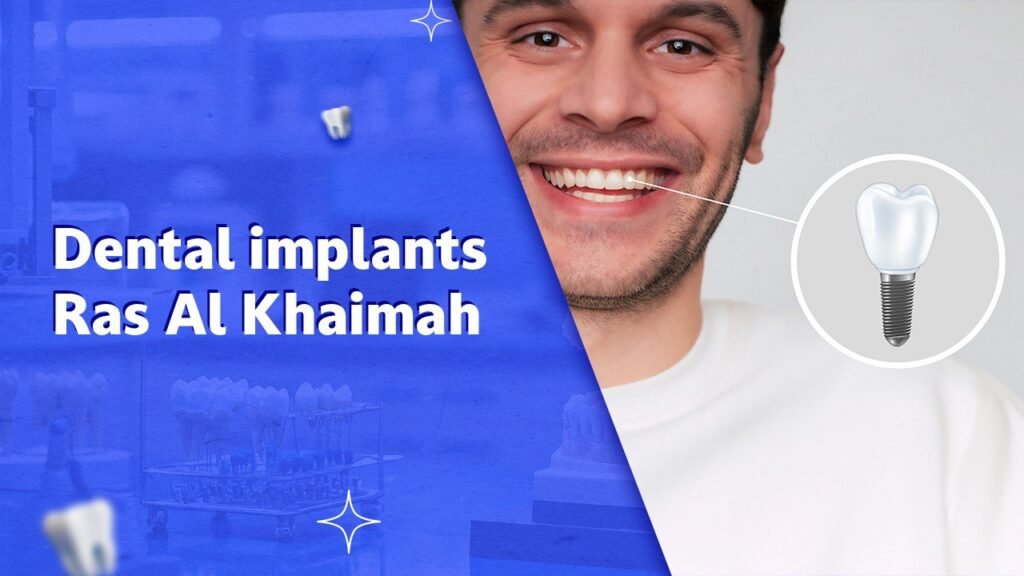
Most people only see two parts of an implant treatment: the surgery and the finished tooth. What happens in between gets far less attention, yet it decides how the tooth looks, how it bites, and how long it lasts. We’re the lab side of that story. At Swift Lab, we build the crowns, abutments, and frameworks that dentists fit on implants every week, so we see firsthand what separates a restoration that lasts twenty years from one that comes back for a remake.
This guide walks through how dental implants in Ras Al Khaimah come together, the restoration options available, and what dentists weigh before placing one.
What Is a Dental Implant, Really?
An implant has three parts. The first is a small titanium post that the surgeon places in the jawbone, where it fuses with the bone over a few months and acts like a new root. On top of that sits the abutment, a connector that links the post to the visible tooth. The third part is the crown, the tooth you actually see and chew with.
The post is usually a standard manufactured part. The abutment and crown are where the lab comes in. They’re made for one mouth only, shaped to the patient’s gums and bite and shaded to blend with the teeth beside them. When that work is done well, nobody can tell which tooth is the implant.
Restoration Options We Build
There’s no single “implant tooth.” The right design depends on where the implant sits, how many teeth are missing, and what the dentist wants to be able to do later on.
Screw-retained or cemented crowns and bridges
A screw-retained crown is held in place by a small screw through the top of the tooth. The big advantage is that the dentist can take it off later for cleaning or repairs without damaging anything, and there’s no leftover cement under the gum to irritate the tissue. A cemented crown is bonded onto the abutment instead. It can look slightly better in some front tooth cases because there’s no screw access hole to fill. Many dentists choose screw-retained for back teeth and decide case by case at the front.
Custom zirconia and pre-milled abutments
Pre-milled abutments start from blanks made to match a specific implant system, then get shaped to the case. They’re reliable and precise at the connection. Custom zirconia abutments are designed from scratch for the patient’s gum shape. Because zirconia is tooth colored, it’s the go-to choice for front teeth, especially when the gum is thin and a metal abutment might show through as a grey shadow.
Cobalt chromium bars and frameworks
When a patient is replacing a full arch, the teeth need a rigid base underneath. Cobalt chromium (CoCr) bars are strong, resist wear well, and cost less than many alternatives, which makes them a practical choice for overdentures and fixed full arch work.
PEEK frameworks
PEEK is a high-performance plastic that’s much lighter than metal and has a little give to it. That slight flexibility absorbs some of the chewing force before it reaches the implants and bone. It also suits patients who want a metal-free option.
If you’re comparing costs across these options, our breakdown of dental implant costs lists current prices for our implant crowns and components.
What Dentists Weigh Before Choosing an Implant
Good implant outcomes are planned long before anything is placed. These are the questions a careful dentist works through first.
Is the patient a good candidate?
Everything starts with a proper consultation. The dentist looks at the teeth and gums, asks about medical history, and talks through what the patient hopes the result will look like. Someone replacing a single front tooth has very different priorities from someone replacing a whole arch of dentures.
Is there enough bone?
An implant needs enough healthy bone around it to stay stable. A CBCT scan shows the bone’s height, width, and density in 3D, along with nearby nerves and sinuses. If the bone is thin, the dentist may recommend a bone graft or sinus lift before placing the implant. It adds time, but skipping it is one of the most common reasons implants fail.
How is the patient’s general health?
Healing matters as much as surgery. Poorly controlled diabetes, heavy smoking, and certain medications can slow the bone’s ability to fuse with the implant. None of these automatically rule someone out, but they change the plan, and sometimes the timeline.
What size and position will work?
Implants come in different lengths and widths, and the angle matters as much as the size. Dentists increasingly plan placement digitally, sometimes with a surgical guide, so the implant ends up exactly where the final crown needs it. When that planning is shared with the lab early, we can design the abutment and crown around the ideal tooth position rather than working around a compromise.
Why the Lab Matters More Than Most Patients Realise
A patient in Ras Al Khaimah might never visit a dental lab, but the lab’s work is in their mouth every time they eat. A crown that’s slightly off at the margin traps plaque. A framework that doesn’t sit passively puts constant strain on the implants. These problems don’t always show on day one, which is exactly why precision at the bench matters.
We design every implant restoration in CAD/CAM, mill it in-house, and check the fit before it leaves our dental laboratory in Ras Al Khaimah. For clinics across the UAE, we offer courier collection and support both digital scans and conventional impressions.
Once the crown is in, looking after it is fairly simple. The same habits that protect a natural tooth protect an implant, and our guide to zirconia crown care covers the daily routine that keeps both the crown and the gum around it healthy.
For Dentists
If you place or restore dental implants in Ras Al Khaimah and want a lab that treats every case like it’s going in a family member’s mouth, we’d like to hear from you. Many clinics first find us searching for a reliable dental lab near me, and stay because the restorations fit the first time.
For Patients
If you’re considering dental implants in Ras Al Khaimah, your dentist is the right place to start. Ask them which restoration they recommend for your case and why, how they plan implant placement, and which lab makes their crowns. A good dentist will be happy to answer all three.